

Tata Ace: #HeroStories
The product didn't need to become the hero. Its value showed up through the person building a livelihood with it.
The Challenge
A working day,
not a spec sheet.
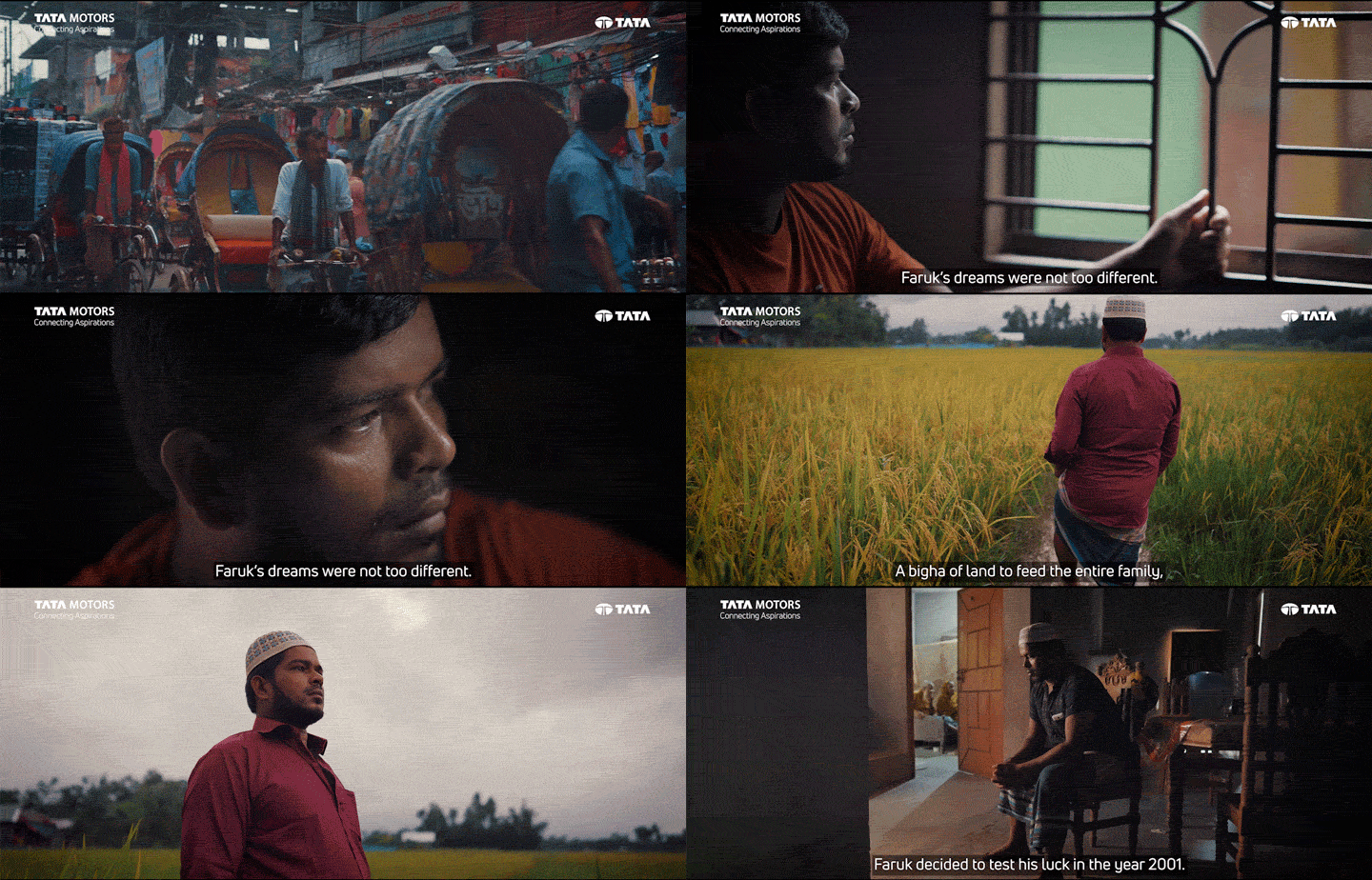
Commercial vehicle films usually begin with payload and performance. Those matter, but they don't explain why the vehicle matters to someone whose income and independence move with it. The aim was product relevance through lived use, without a scripted testimonial.
Our Approach
Capability shown
through use, not claimed.
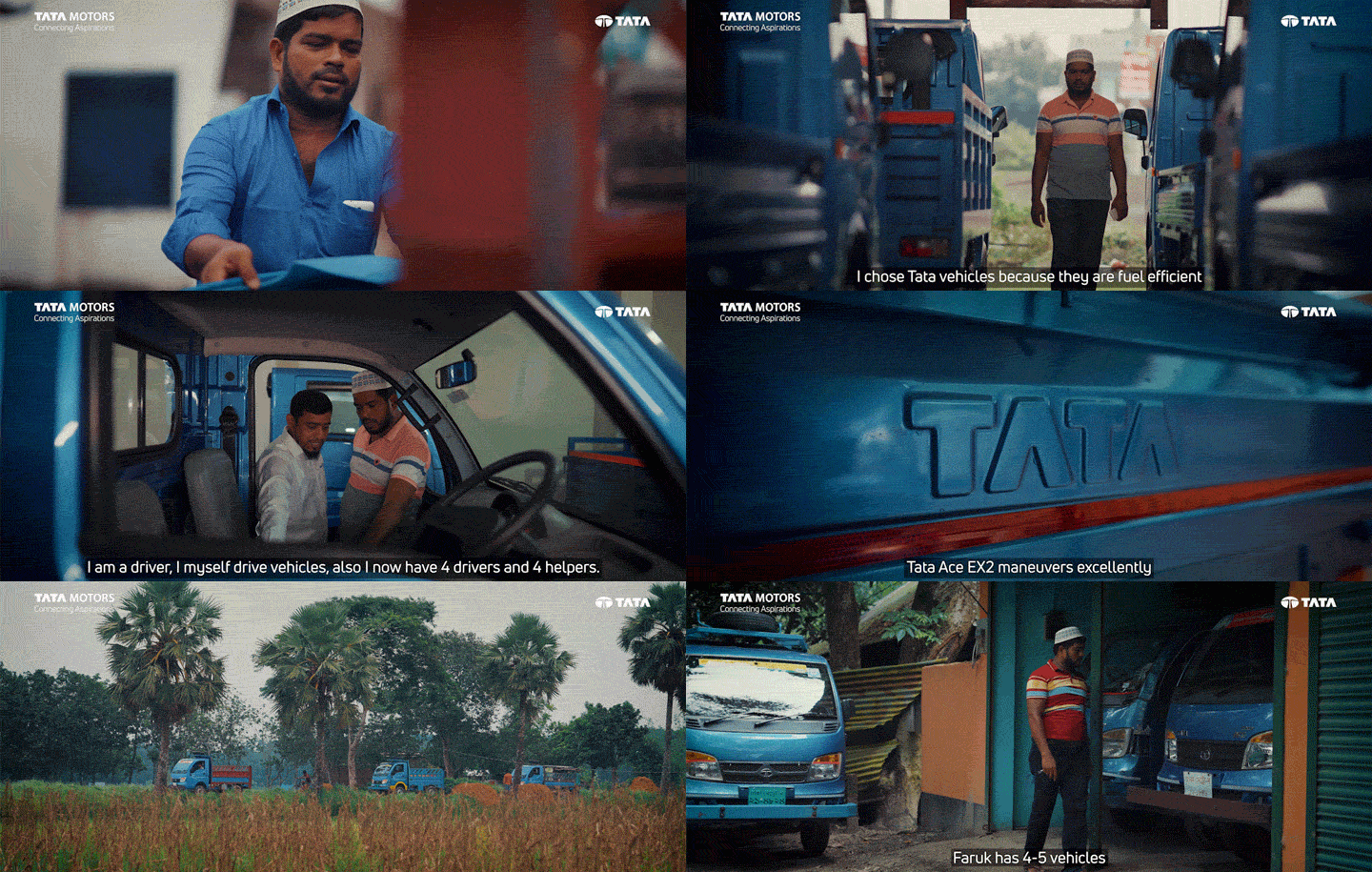
Follow the rhythm of work, not a feature list. The film is built around the owner's day and the movement of goods. Interviews give context; observational sequences show the vehicle doing its work inside a real livelihood.
The Angle
A person,
not a product user.
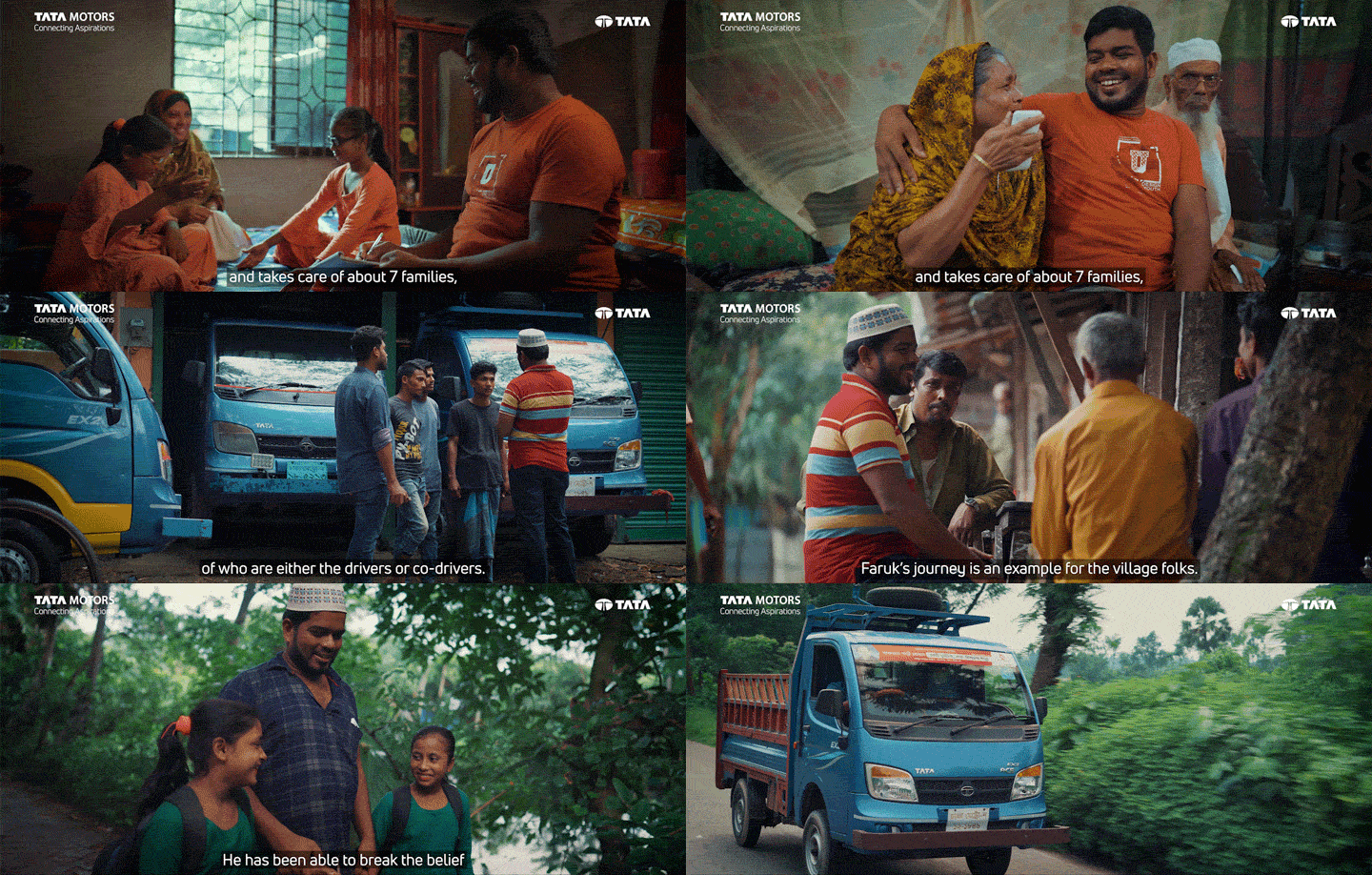
The vehicle became a supporting character. The #HeroStories frame keeps dignity and agency with the entrepreneur, and the brand's value emerges from the partnership.
84.9%
of Bangladesh's working population was in informal employment (96.6% among employed women).
The film gives that economy a face, a working day and a personal ambition.
A product-led brief became a livelihood story, with the brand naturally present and commercially relevant.